

Introduction
Most people try to change their lives by relying on willpower alone, and most people fail — not because they lack discipline, but because they’re fighting against how the brain actually works. The science behind better habits shows that lasting change has less to do with motivation and more to do with structure, repetition, and the way our brains process cues and rewards.
Habits run roughly 40% of our daily behavior, often without us consciously deciding anything. That means the way you brush your teeth, check your phone, or respond to stress isn’t really a choice each time — it’s a pattern your brain has automated to save energy.
Understanding this changes everything. Once you know how habits form at a neurological level, you can stop blaming yourself for “lacking willpower” and start designing routines that work with your brain instead of against it.
In this article, you’ll learn:
- How habits are formed in the brain
- The habit loop and why it matters
- The real science behind better habit change (not just motivational advice)
- Practical, research-backed strategies to build habits that last
- Common mistakes that sabotage habit formation
- How to break bad habits using the same science
Whether you’re a student trying to study consistently, a professional wanting a better morning routine, or an entrepreneur trying to build discipline into a chaotic schedule, this guide will give you a clear, practical understanding of how habits actually work.

What Is a Habit, Really?
A habit is a behavior that has become automatic through repetition, triggered by a specific context rather than a conscious decision. In simple terms, it’s something your brain does on autopilot because it has done it enough times before.
This is different from a routine, which involves multiple behaviors performed intentionally, and different from a one-time decision. Habits form in a part of the brain called the basal ganglia, which handles automatic behaviors, emotions, and pattern recognition — separate from the prefrontal cortex, which handles decision-making and conscious thought.
This distinction matters. It explains why you can drive home from work without remembering the actual drive, but struggle to remember whether you locked the front door. One is a habit; the other required conscious attention.
The Neuroscience of Habit Formation
To truly understand how habits are formed in the brain, we have to look at a process called ‘chunking’ discovered by researchers at MIT studying rodent behavior found that neural activity spikes at the beginning and end of a learned behavior sequence, while quieting down in the middle — a phenomenon known as “chunking.”
This is efficient by design. The brain wants to conserve energy, and automating repeated behaviors frees up mental resources for new or complex tasks. It’s the same reason experienced drivers can hold a conversation while driving, while new drivers need total focus.
Why This Matters for You
- Once a habit is chunked, it requires very little conscious effort to perform
- This is also why bad habits are hard to break — they’re neurologically efficient, not just psychologically comfortable
- New habits take repeated exposure to the same cue and reward before this chunking occurs

The Habit Loop: Cue, Routine, Reward
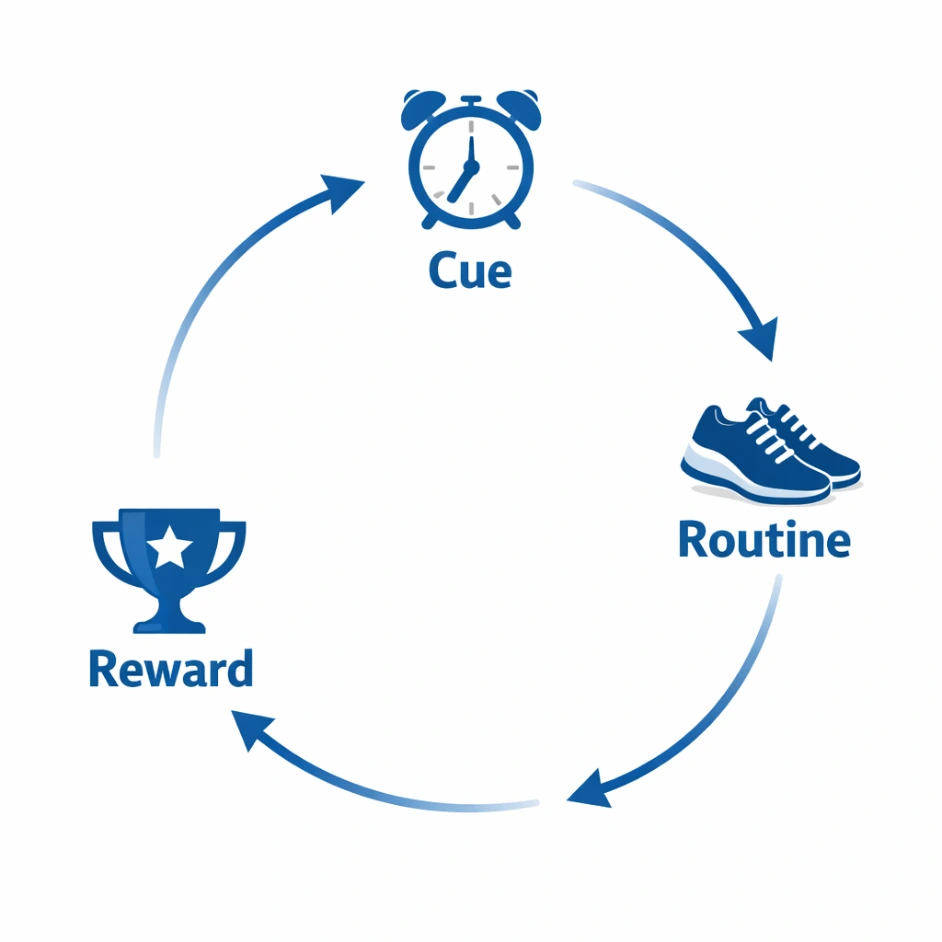
Behavioral researchers, including those cited in Charles Duhigg’s widely referenced work on habit formation, describe habits as operating through a three-part loop:
- Cue — a trigger that tells your brain to go into automatic mode (a time of day, location, emotional state, or preceding action)
- Routine — the behavior itself, physical, mental, or emotional
- Reward — the benefit your brain gets from the behavior, which reinforces the loop
A Real-World Habit Loop Example
- Cue: You feel stressed at your desk
- Routine: You open a social media app
- Reward: A brief dopamine hit and distraction from discomfort
Over time, this loop becomes so automatic that the cue alone can trigger a craving for the reward, even before the routine happens. This is why habits can feel involuntary — because, neurologically, they largely are.
A later addition to this model, popularized by behavior researcher James Clear, adds a fourth stage: craving, which sits between the cue and the routine and explains why we feel pulled toward certain behaviors before we even act on them.

Why Willpower Alone Doesn't Work
Willpower is often treated like a fixed personality trait, but psychological research suggests it behaves more like a limited resource that depletes with use — a concept known as ego depletion, first proposed by psychologist Roy Baumeister.
While later studies have debated how strong this effect is, the practical takeaway holds up: relying purely on willpower to resist temptation or force new behavior is unreliable, especially under stress, fatigue, or decision overload.
Why This Matters
- Willpower is highest in the morning and depletes throughout the day for most people
- Environmental design (removing temptations, setting up cues) is more reliable than raw self-control
- Trying to build multiple new habits at once increases the odds of failure, because it spreads limited willpower too thin
This is why the most effective habit-building strategies focus on reducing the need for willpower rather than increasing it.
This is a core pillar of the science behind better habits rely on environmental design, not raw self-control.
How Long Does It Take to Form a Habit?
The commonly cited “21 days to form a habit” claim is a myth with no solid scientific backing. It originated from a 1960s observation by a plastic surgeon about patients adjusting to physical changes — not a controlled study on habit formation.
The most frequently referenced research on this topic comes from a 2009 study by health psychologist Phillippa Lally at University College London, published in the European Journal of Social Psychology. The study tracked participants forming new habits and found that, on average, it took 66 days for a behavior to become automatic — though the range varied from 18 to 254 days depending on the person and the complexity of the habit.
Key Takeaways from the Research
- Simple habits (like drinking a glass of water after waking up) form faster
- Complex habits (like a full exercise routine) take longer
- Missing a day occasionally doesn’t significantly harm habit formation, according to the same study
- Consistency matters more than perfection

The Role of Dopamine in Habit Formation
Dopamine is often misunderstood as a “pleasure chemical,” but its real role is closer to anticipation and motivation. Research from neuroscientist Wolfram Schultz’s work on reward prediction shows that dopamine spikes not just when we receive a reward, but when we anticipate one.
This is why cravings can feel stronger than the actual reward itself. Your brain releases dopamine when it recognizes a cue associated with a reward, which is what drives the urge to act — before any actual benefit occurs.
Practical Implication
- You can use this to your advantage by making healthy habits feel immediately rewarding, even in small ways
- Pairing a new habit with something enjoyable (music, a favorite drink, a small treat) can help the brain associate the behavior with reward faster
- This is also why “instant gratification” habits like scrolling or snacking are so hard to resist — they trigger dopamine faster than slower rewards like fitness or savings
Practical Strategies To Break Bad Habits
To apply the science behind better habits to your daily life, use these six research-backed techniques.
1. Start Absurdly Small
Instead of “exercise for an hour,” start with “put on your workout shoes.” The goal is to lower the barrier to entry so much that skipping feels harder than doing it.
2. Anchor New Habits to Existing Ones (Habit Stacking)
Attach a new habit to a behavior you already do consistently.
- After I pour my morning coffee, I will write down three priorities for the day
- After I brush my teeth, I will do a two-minute stretch
3. Design Your Environment
Make good habits easier to start and bad habits harder to access.
- Keep a water bottle on your desk
- Remove social media apps from your home screen
- Lay out gym clothes the night before
4. Use Immediate Rewards
Since delayed rewards are weaker motivators, add a small, immediate reward after completing a new habit — even something as simple as checking it off a tracker.
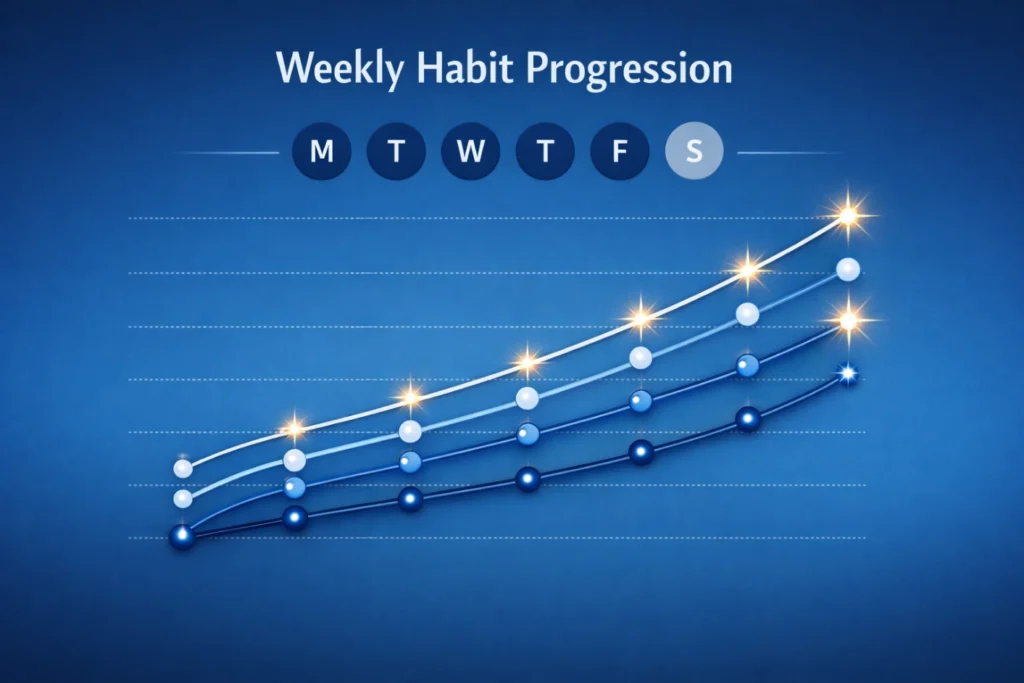
5. Track Visually
A visible habit tracker (calendar, app, or journal) provides a sense of progress, which itself becomes a reward and reduces the temptation to break the streak.
6. Expect and Plan for Setbacks
Missing one day rarely derails a habit. What matters is having a plan to get back on track quickly rather than treating a slip as failure.

Common Mistakes That Sabotage Habit Change
- Trying to change too much at once — spreads willpower too thin
- Setting vague goals (“exercise more”) instead of specific, trackable actions
- Relying on motivation instead of designing systems and environments
- All-or-nothing thinking — treating one missed day as total failure
- Ignoring the cue — trying to change the routine without addressing what triggers it
- No reward attached — habits without a satisfying payoff rarely stick
- Copying someone else’s routine without adjusting it to your own schedule and context
How to Break Bad Habits Using Science

Breaking a habit uses the same loop, but in reverse.
- Identify the cue that triggers the unwanted behavior
- Identify the craving driving it (boredom, stress relief, social connection)
- Replace the routine with a different behavior that satisfies the same craving
- Keep the reward as similar as possible, so the brain doesn’t feel deprived
For example, if stress (cue) leads to snacking (routine) for comfort (reward), replacing snacking with a short walk or deep breathing can satisfy the same emotional need without the same physical outcome.
Simply trying to “stop” a habit without addressing the underlying cue and craving usually fails, because the craving doesn’t disappear — it just looks for another outlet.
Case Study: Habit Stacking in Action
A frequently cited real-world example comes from healthcare settings, where hospitals adopted checklist-based habits to reduce errors. A well-known study published in the New England Journal of Medicine found that implementing a simple surgical safety checklist reduced complications and deaths significantly across multiple hospitals — not because it added new skills, but because it turned critical steps into automatic, repeatable habits.
This illustrates a core principle: habits aren’t just personal productivity tools. When designed well, they reduce error, save mental energy, and create consistency even in high-stakes environments.
On an individual level, the same logic applies. Professionals who “stack” a two-minute planning habit onto their existing coffee routine often report better daily focus — not because planning is complicated, but because it becomes automatic rather than something they have to remember to do.
Best Practices for Long-Term Habit Success
- Focus on identity, not just outcomes (“I am someone who exercises” rather than “I want to lose weight”)
- Build one habit at a time before adding another
- Review and adjust habits every few weeks based on what’s actually working
- Use accountability (a friend, app, or public commitment) to reinforce consistency
- Celebrate small wins instead of waiting for a “big” result
- Be patient — 66 days is an average, not a deadline
Key Takeaways
- Habits are automatic behaviors formed through repeated cue-routine-reward loops, not simple willpower exercises
- The basal ganglia, not the decision-making prefrontal cortex, drives habitual behavior
- On average, habits take about 66 days to form, not 21 — and this varies by person and complexity
- Willpower is a limited resource, so environment design is more reliable than self-control alone
- Dopamine drives anticipation and craving, not just pleasure, which explains why habits feel automatic
- Small, consistent actions beat large, inconsistent efforts
- Breaking bad habits works best by replacing the routine while keeping the same cue and reward
- Missing a day occasionally won’t ruin a habit — what matters is getting back on track
Frequently Asked Questions
1. How long does it really take to build a habit? On average, about 66 days, based on the 2009 UCL study by Phillippa Lally, though this can range from 18 to over 250 days depending on the habit’s complexity and the individual.
2. Is the “21 days to form a habit” rule true? No. It’s a popular myth with no strong scientific basis, originally based on a surgeon’s informal observation, not controlled research.
3. Why do bad habits feel harder to break than good ones are to build? Bad habits are often reinforced by fast, immediate rewards (dopamine spikes), while good habits usually offer slower, delayed rewards, making them feel less urgent to your brain.
4. Does missing one day ruin a habit? No. Research suggests occasional missed days don’t significantly affect long-term habit formation, as long as the behavior resumes soon after.
5. What’s the difference between a habit and a routine? A habit is automatic and triggered by a cue with minimal conscious thought, while a routine is a series of intentional actions performed deliberately, even if repeated regularly.
6. Can you build multiple habits at the same time? It’s possible, but harder. Because willpower and attention are limited resources, focusing on one habit at a time generally leads to higher success rates.
7. What is habit stacking? Habit stacking means attaching a new habit to an existing one, using the current habit as a built-in cue (for example, “After I pour my coffee, I’ll write my top three priorities”).
8. Why do rewards matter so much in habit formation? Rewards reinforce the cue-routine loop by signaling to the brain that the behavior was worth repeating, which strengthens the neural pathway over time.
Conclusion
Better habits aren’t built through sheer discipline or motivation — they’re built through understanding how your brain actually processes cues, cravings, and rewards, and then designing your environment and routines around that reality. Once you stop treating habit change as a test of character and start treating it as a system you can engineer, consistency becomes far less exhausting.
The people who successfully build lasting habits aren’t more disciplined than everyone else. They’ve simply learned to work with their brain’s wiring instead of constantly fighting it — starting small, anchoring new behaviors to existing ones, and giving themselves room to miss a day without giving up entirely.