
Introduction
Artificial Intelligence has quietly moved from something we talk about to something we live with. In 2026, it’s no longer a futuristic concept reserved for tech conferences and sci-fi movies — it’s the voice assistant that adjusts your thermostat, the app that sorts your work inbox, and the system that helps doctors catch illnesses earlier than ever before.
What makes this moment different is scale. AI adoption has grown faster than smartphone adoption did in its early years, and it now touches nearly every part of daily routines: how people work, learn, shop, commute, and even how they manage stress. For students, this means new study tools and tutors available around the clock. For professionals, it means AI handling repetitive tasks so they can focus on higher-value work. For beginners just getting curious about the technology, it means there’s never been an easier time to start using it.
This article breaks down exactly how Artificial Intelligence is showing up in everyday life in 2026 — not in abstract, theoretical terms, but through real examples from homes, workplaces, hospitals, classrooms, and city streets. You’ll learn which changes are already here, which are still developing, what the genuine benefits and risks look like, and how to use AI tools wisely without losing sight of the human side of life.
Whether you’re a student curious about AI’s role in classrooms, a professional wondering how it affects your job, or simply someone trying to understand the technology shaping the world around you, this guide will give you a clear, practical picture of where things stand right now.

What "Everyday AI" Really Means in 2026
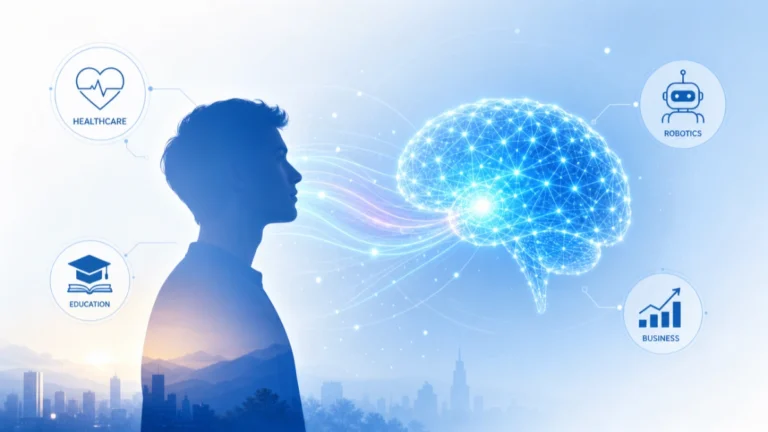
The phrase “Artificial Intelligence” used to bring up images of robots and distant future scenarios. That’s changed. Today, AI mostly works quietly in the background — a concept often called “invisible AI,” where the technology operates behind everyday apps and devices instead of presenting itself as a separate, dramatic tool.
Think of it less like a single product and more like electricity: you don’t think about the wiring behind your walls, but it powers almost everything you touch. AI now works the same way inside phones, cars, browsers, and home devices.
How Widespread Is AI Use Right Now?
The numbers tell a clear story about how fast this shift has happened:
- More than two-thirds of Americans now use AI tools in their daily routines, with AI adoption spreading roughly twice as fast as smartphone adoption did in the late 2000s.
- About one in four adults interact with AI several times a day, and around half use AI tools at least once a week.
- Across OECD countries, more than a third of individuals used generative AI tools in 2025, with usage especially high among students — roughly three in four students aged 16 and over report using these tools.
- Global AI usage reached close to 18% of the world’s working-age population in early 2026, with countries like the UAE leading adoption at over 70%.
These figures show that AI isn’t a niche interest anymore. It has become as ordinary as using a search engine or a map app.
Why “Invisible AI” Matters
The most important shift in 2026 isn’t a flashy new chatbot — it’s how AI has folded itself into things people already do. Smart home systems adjust lighting and temperature without being asked. Traffic systems ease congestion in the background. Email apps draft replies before you even open them.
This invisibility is convenient, but it also raises a fair question: if AI is working quietly behind the scenes, how do people stay in control of decisions that affect them? That tension between convenience and transparency is something we’ll return to throughout this article.
How AI Is Changing the Way We Work
Work is where Artificial Intelligence’s daily-life impact is most visible, especially for professionals. The shift isn’t about robots replacing entire jobs — it’s about AI becoming something closer to a digital teammate.
AI Agents as Digital Coworkers
Rather than just answering questions, Artificial Intelligence tools in 2026 increasingly act on instructions. These are often called “AI agents” — systems that can plan a task, carry it out across multiple steps, and report back, rather than waiting for a new prompt at every stage.
Practical examples already in use:
- Scheduling and inbox management — AI agents draft email replies, summarize long threads, and propose meeting times automatically.
- Document handling — Tools can pull data from PDFs, fill out reports, and flag inconsistencies without manual review of every page.
- Project coordination — AI-powered project management tools predict bottlenecks and suggest resource adjustments before a deadline becomes a crisis.
- Coding assistance — Developers use AI coding tools to write, test, and debug code faster, cutting development time significantly compared to manual coding alone.
Real-World Example
A small marketing team of three people can now produce work that once required a much larger staff. AI tools draft initial ad copy, generate variations for A/B testing, and summarize performance data — leaving the team free to focus on strategy and creative judgment rather than repetitive production work.
The Productivity Trade-Off
Workers using Artificial Intelligence tools report saving meaningful chunks of time each day — often estimated at around 50 to 60 minutes. But there’s an interesting wrinkle: many employees believe that saved time belongs to them personally, not automatically to their employer, which is starting to influence workplace policies around flexibility and output expectations.
Best Practices for Using AI at Work
- Treat AI output as a draft, not a final answer — review before sending or publishing anything important.
- Use AI for repetitive, well-defined tasks (scheduling, summarizing, formatting) rather than high-stakes judgment calls.
- Keep a record of which decisions were Artificial Intelligence -assisted, especially in regulated industries like finance or healthcare.
- Build basic AI literacy — understanding prompt writing and tool limitations is becoming a practical career skill, not just a technical one.

AI at Home: Smarter Living Spaces
Walk into a modern home in 2026, and AI is likely doing more than you’d notice at first glance.
Smart Home Systems
AI-driven home systems now handle tasks that used to require manual adjustment:
- Climate control that learns your schedule and adjusts heating or cooling before you even ask.
- Lighting systems that respond to time of day, occupancy, or mood settings.
- Security systems that distinguish between a family member, a delivery person, and an unfamiliar visitor using image recognition.
- Voice assistants that manage shopping lists, reminders, and smart appliances through natural conversation.
AI-Powered Wearables and Devices
Hardware is catching up to software. Smart glasses with built-in cameras, microphones, and Artificial Intelligence assistants can now recognize objects, translate spoken language in real time, and respond to voice commands without needing a phone in hand. This marks a shift from Artificial Intelligence living only inside apps to AI becoming part of what you wear.
Example: A Typical Morning
Picture this everyday scenario: an Artificial Intelligence -enabled alarm checks traffic and weather before waking you up at the optimal time. The kitchen display suggests breakfast based on what’s in your smart fridge. Your AI assistant reads out your calendar and flags a conflict between two meetings — all before you’ve had your coffee.
This is what “ambient AI” looks like in practice — not a dramatic leap, but a series of small conveniences stacked together.
Things to Watch For
- Data privacy — smart home devices collect detailed behavioral data; check privacy settings regularly.
- Over-reliance — losing the habit of manually checking things (like whether the oven is off) can create blind spots if a device malfunctions.
- Compatibility issues — not all smart devices work seamlessly together, which can lead to frustrating troubleshooting.

AI in Healthcare: Earlier, Smarter, More Personal
Healthcare is one of the clearest examples of Artificial Intelligence delivering real, measurable benefits to people’s lives.
Diagnosis and Early Detection
Machine learning models can now analyze medical imaging, lab results, and patient history to spot patterns that are difficult for the human eye to catch consistently. This has been especially valuable in:
- Cancer screening — AI-assisted image analysis helps radiologists detect early-stage tumors that might otherwise be missed.
- Chronic disease monitoring — wearable sensors combined with Artificial Intelligence track vital signs and flag irregularities before they become emergencies.
- Hospital resource planning — predictive models forecast patient admission rates, helping hospitals manage staffing and equipment more efficiently.
Personalized Treatment and Patient Support
Beyond diagnosis, AI is helping personalize care:
- Virtual health assistants remind patients to take medication and track symptoms between doctor visits.
- AI-driven tools help match treatment plans to a patient’s specific genetic and health profile rather than a one-size-fits-all approach.
- Administrative AI reduces the paperwork burden on clinicians, freeing up more time for direct patient care.
A Practical Example
Consider a patient managing a chronic condition like diabetes. An AI-powered app can track blood sugar readings throughout the day, identify patterns linked to specific meals or activities, and send alerts to both the patient and their care team if something looks off — all without requiring a clinic visit.
Challenges in Healthcare AI
- Accuracy isn’t guaranteed — AI tools can still make errors, especially with underrepresented patient groups in training data.
- Accountability questions — when an AI-assisted diagnosis is wrong, it’s not always clear who is responsible.
- Access gaps — not all healthcare systems or regions have equal access to these tools, which can widen existing inequalities.

AI in Education: A New Way to Learn
For students, AI has shifted from being a novelty to a genuine study companion — and in some cases, a source of concern for educators trying to balance its benefits with academic integrity.
How Students Use AI
Generative AI adoption in education has expanded quickly. A large share of students now use AI tools regularly for tasks like:
- Summarizing dense reading material into digestible notes.
- Practicing problems with step-by-step explanations rather than just final answers.
- Getting instant feedback on writing structure, grammar, and clarity.
- Brainstorming essay topics or research angles.
How Educators Are Adapting
Teachers are integrating AI into lesson planning, grading support, and personalized learning paths. However, there’s a noticeable gap: many educators report receiving little formal training on how to use AI responsibly in the classroom, even as student adoption grows quickly.
Example: Personalized Tutoring
A high school student struggling with algebra can now use an AI tutor that adapts to their specific mistakes — slowing down on concepts they consistently get wrong and skipping ahead on ones they’ve mastered. This kind of individualized pacing was once only possible with one-on-one human tutoring.
Best Practices for Students
- Use AI to understand concepts, not just to get final answers — ask it to explain its reasoning.
- Always verify facts and citations AI provides, especially for academic work; AI tools can produce convincing but incorrect information.
- Be transparent with teachers about AI use where required, since academic policies vary widely.
- Use AI as a study partner for practice questions rather than a replacement for actually learning the material.
Common Mistake to Avoid
A frequent misstep among students is copying AI-generated answers directly without reviewing them critically. This can lead to factual errors going unnoticed and, in academic settings, can violate originality policies. Treat AI as a tutor that explains, not a vending machine for finished homework.

AI in Transportation and Daily Commutes
Getting from one place to another has quietly become more automated.
Autonomous and Semi-Autonomous Vehicles
Self-driving technology has moved well past the experimental stage in certain cities, where fully autonomous vehicles are available to hail for everyday trips. The autonomous vehicle market has grown substantially as the underlying technology matures and regulatory frameworks catch up.
Smarter Traffic and Navigation
AI doesn’t just power the vehicles themselves — it also manages the systems around them:
- Traffic management systems use real-time data to ease congestion at busy intersections.
- Navigation apps predict delays based on patterns, not just current traffic, often rerouting before a slowdown even starts.
- Public transit systems in some cities use AI to adjust schedules dynamically based on real ridership data.
Practical Example
A commuter using a navigation app gets rerouted ten minutes before a major slowdown begins — not because of current traffic, but because the AI recognizes a pattern from similar days (a nearby event letting out, for instance) and adjusts proactively.
Things to Keep in Mind
- Autonomous vehicle regulations vary significantly by city and country, so availability isn’t universal.
- Full trust in automated systems still requires caution; human oversight remains important during this transition period.
AI In Finance
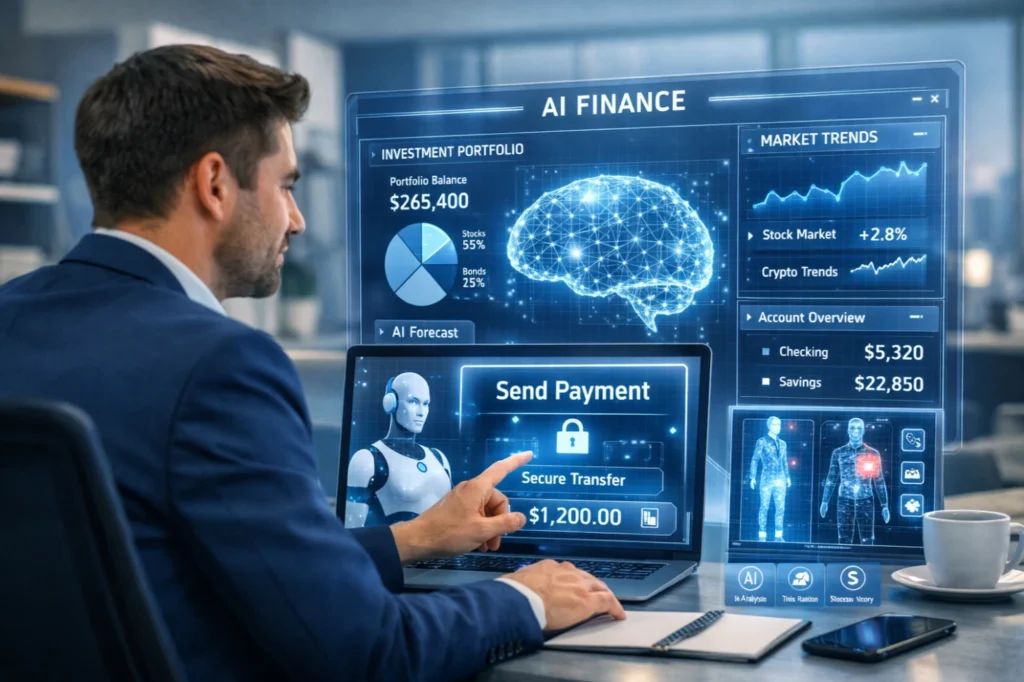
Money management is another area where AI has become a quiet, constant presence.
Everyday Financial Tools
- Budgeting apps use AI to categorize spending automatically and flag unusual transactions.
- Fraud detection systems at banks analyze patterns in real time, often catching suspicious activity before a human would notice.
- Robo-advisors offer personalized investment suggestions based on individual risk tolerance and goals, making portfolio management accessible to people who wouldn’t otherwise work with a financial advisor.
- Conversational banking interfaces let customers check balances, dispute charges, or ask questions through natural chat rather than navigating menus.
A Word of Caution
While AI-powered financial tools can be genuinely useful for everyday tasks like tracking spending or catching fraud, they aren’t a substitute for professional financial or legal advice — especially for major decisions like investments, loans, or retirement planning. AI can help organize information, but the responsibility for big financial choices should stay with a qualified professional or your own informed judgment.
Best Practices
- Use AI budgeting tools to build awareness of spending habits, not as the sole basis for major financial decisions.
- Double-check AI-flagged “savings opportunities” — they’re sometimes based on incomplete context.
- Be cautious about connecting financial accounts to third-party AI apps; verify their security practices first.
The Rise of AI Companionship and Emotional Support
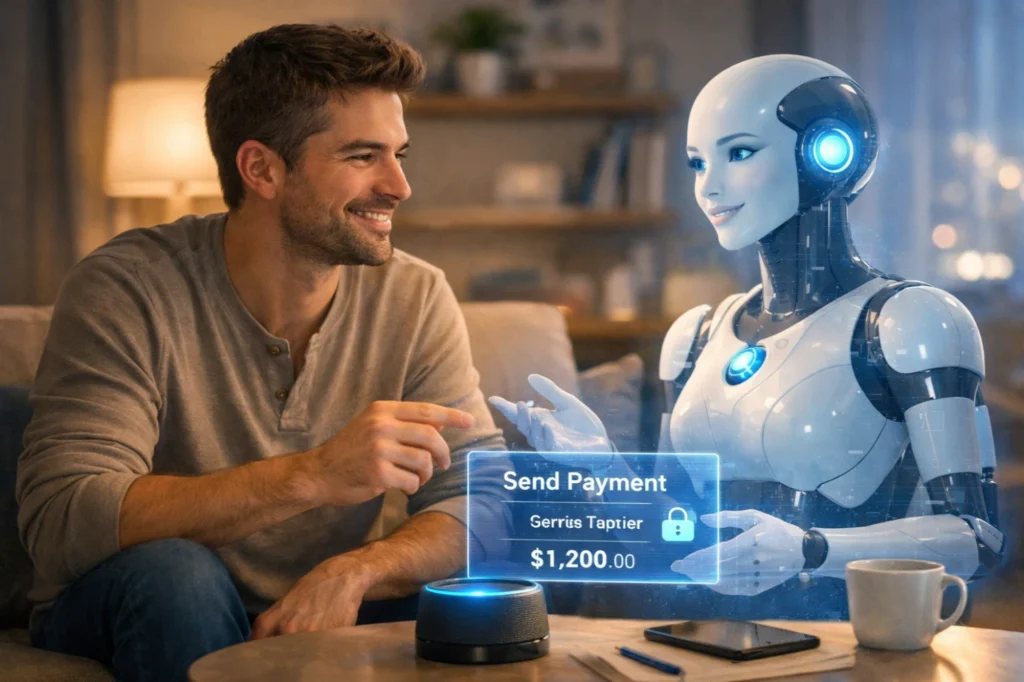
One of the more unexpected shifts in 2026 is how many people are turning to AI for emotional support, not just productivity.
A growing number of people use chatbots for stress relief, casual conversation, or therapy-style check-ins. This reflects a broader pattern: AI is no longer just a tool for tasks — for some, it’s becoming part of how they process daily emotions.
Why This Matters
This trend comes with real benefits, like accessibility for people who can’t access traditional therapy easily. But it also raises legitimate concerns:
- AI companionship tools are not a replacement for licensed mental health professionals.
- Emotional reliance on AI can create blind spots if the technology gives generic or even inaccurate guidance during a real crisis.
- Privacy concerns are heightened when people share sensitive emotional information with AI systems.
If you or someone you know is leaning on AI tools during a difficult time, it’s worth treating that as a signal to also reach out to a real support system — friends, family, or a licensed professional — rather than relying on AI as the only outlet.
Benefits of AI in Everyday Life
Pulling together the themes above, here’s a clear summary of where AI is genuinely improving daily life:
- Time savings — automating repetitive tasks at work and home frees up hours for more meaningful activities.
- Earlier health detection — AI-assisted screening can catch certain conditions sooner than traditional methods alone.
- Personalized learning — students get tailored support that adapts to their specific strengths and weaknesses.
- Safer roads — predictive traffic systems and advancing autonomous vehicle technology aim to reduce accidents over time.
- Greater financial awareness — automated tracking and fraud detection help people manage money more confidently.
- Increased accessibility — voice assistants and translation tools help people with disabilities or language barriers navigate daily life more easily.
Challenges and Risks Worth Knowing About
It’s just as important to be clear-eyed about the downsides.
- Privacy concerns — AI systems often rely on large amounts of personal data, raising questions about how that data is stored and used.
- Job displacement in specific roles — while AI is creating new types of work, certain repetitive roles are genuinely at risk of automation.
- Trust and transparency gaps — many people don’t fully understand how AI makes decisions that affect them, from loan approvals to content recommendations.
- Inconsistent accuracy — AI tools can produce confident-sounding but incorrect information, a problem sometimes called “hallucination.”
- Energy consumption — training and running large AI models requires significant computing power and energy, raising environmental questions.
- Public anxiety — despite high adoption, many people report feeling uneasy about AI’s growing role in employment, relationships, and society, even while using it daily.
Best Practices for Using AI Responsibly
It’s just as important to be clear-eyed about the downsides.
- Privacy concerns — AI systems often rely on large amounts of personal data, raising questions about how that data is stored and used.
- Job displacement in specific roles — while AI is creating new types of work, certain repetitive roles are genuinely at risk of automation.
- Trust and transparency gaps — many people don’t fully understand how AI makes decisions that affect them, from loan approvals to content recommendations.
- Inconsistent accuracy — AI tools can produce confident-sounding but incorrect information, a problem sometimes called “hallucination.”
- Energy consumption — training and running large AI models requires significant computing power and energy, raising environmental questions.
- Public anxiety — despite high adoption, many people report feeling uneasy about AI’s growing role in employment, relationships, and society, even while using it daily.
Common Mistakes People Make With AI Tools
- Assuming AI is always accurate. Confidence in tone doesn’t equal correctness — always sanity-check important outputs.
- Ignoring privacy settings. Many people accept default data-sharing permissions without reviewing what’s actually being collected.
- Using AI as a substitute for professional advice. This is especially risky in health, legal, and financial contexts.
- Over-automating without oversight. Letting AI agents act independently on important tasks without periodic human review can lead to costly errors.
- Underestimating the learning curve. Many people give up on useful AI tools too quickly because their first prompt didn’t produce a great result — refining how you ask often makes a big difference.
Key Takeaways
- AI has moved from a novelty to a normal part of daily life, with adoption now growing faster than smartphones did in their early years.
- “Invisible AI” — automation working quietly behind the scenes — is one of the defining features of how the technology shows up in 2026.
- Workplaces are increasingly using AI agents as digital coworkers for scheduling, document handling, and coding support.
- Healthcare and education are seeing some of the most meaningful real-world benefits, from earlier diagnosis to personalized tutoring.
- Despite high adoption, public anxiety about AI’s social and economic impact remains significant — convenience hasn’t fully translated into trust.
- AI tools are useful for everyday tasks like budgeting or fact-checking, but they are not a substitute for professional medical, legal, or financial advice.
- Responsible use means verifying outputs, protecting personal data, and keeping humans in the loop for important decisions.
Frequently Asked Questions
- Is Artificial Intelligence actually a big part of daily life now, or is this overstated? It’s not overstated. Surveys show that a majority of adults in many countries now use AI tools regularly, with usage in some places growing faster than smartphone adoption did in its early years. The shift has happened largely through everyday apps and devices rather than standalone “AI products.”
- What’s the difference between the AI in my phone and the Artificial Intelligence used in hospitals or businesses? The underlying technology is often similar, but the training and purpose differ significantly. Consumer AI in phones is generally designed for broad, everyday tasks, while healthcare or enterprise AI systems are trained on specialized data for specific, high-stakes purposes like diagnosis or fraud detection.
- Can Artificial Intelligence replace my job? AI is more likely to change how a job is done than eliminate it entirely, especially for roles involving judgment, creativity, or interpersonal skills. That said, certain repetitive, rules-based tasks are genuinely at higher risk of automation, so building AI literacy is a practical way to stay adaptable.
- Is it safe to use Artificial Intelligence chatbots for emotional support? AI chatbots can offer some comfort for everyday stress, but they aren’t a substitute for licensed mental health professionals, especially during a real crisis. If you’re relying heavily on AI for emotional support, it’s worth also maintaining real human connections and professional resources.
- How accurate is Artificial Intelligence , really? Accuracy varies a lot depending on the tool and the task. AI is generally strong at pattern recognition (like spotting anomalies in medical scans or financial transactions) but can still produce confidently wrong answers, especially for nuanced or rapidly changing information. Always double-check important outputs.
- Do I need technical skills to start using Artificial Intelligence tools? No. Most everyday AI tools — voice assistants, chatbots, smart home apps — are designed for non-technical users. Basic familiarity with how to phrase requests clearly (sometimes called “prompting”) goes a long way, but it’s a skill anyone can pick up quickly.
- Is my personal data safe when I use Artificial Intelligence apps? It depends on the app and how carefully you manage your settings. Many AI tools collect behavioral or personal data to function effectively, so it’s worth reviewing privacy policies and permissions regularly rather than accepting defaults blindly.
- What’s the single biggest change Artificial Intelligence has brought to everyday life in 2026? The biggest shift is how invisible AI has become. Rather than being a separate app you consciously open, Artificial Intelligence now operates quietly inside tools people already use daily — emails, navigation apps, smart home devices — making its impact broader but also harder to notice.
Conclusion
Artificial Intelligence in 2026 isn’t a dramatic, single moment of change — it’s a slow accumulation of small conveniences that, together, add up to something significant. Your morning commute, your doctor’s diagnosis process, your child’s homework help, and your evening budgeting check are all touched by it in ways that would have seemed unusual just a few years ago.
The real skill now isn’t learning to use AI — most people are already doing that, often without thinking about it much. The skill is learning when to lean on it and when to step back: when an Artificial Intelligence suggestion deserves a second look, when a human conversation matters more than a quick chatbot reply, and when convenience is worth the trade-off in privacy or oversight.
Artificial Intelligence will keep evolving, and next year’s version of this article will likely look different again. But the core question stays the same: not whether AI belongs in everyday life, but how thoughtfully we choose to let it in.